
Ledge Route Ben Nevis – Complete Guide to Scotland’s Best Scramble
07/10/2025
Petzl Dart Review
12/02/2026
TRAINING FOR SCOTTISH WINTER CLIMBING: BUILDING STRENGTH, SKILL & STAYING POWER
AUTHOR | STEVE HOLMES
Scottish winter climbing is a unique beast. It is not simply cold rock climbing, nor is it pure ice climbing. It sits somewhere in between, shaping its own identity with rimed cracks, iced slabs, wind-scoured ridges and rapidly changing conditions. From the frozen gullies of Ben Nevis to the wild cliffs of the Cairngorms, winter climbing in Scotland demands more from climbers than strength alone. It requires endurance, resilience, mental strength, and the ability to perform when everything feels hostile. Training for this environment should reflect that complexity.
Unlike indoor climbing or summer rock routes, Scottish winter climbing is as much about survival as it is about performance. You are climbing with heavy boots, thick gloves and a pack on your back. The weather rarely plays fair. Approaches are long and often exhausting, and descents can be just as committing as the climb itself. Training, therefore, must go beyond fingerboards and pull-ups. It has to prepare your body and mind to handle cold, fatigue, and uncertainty.
A strong cardio base is one of the most underrated aspects of winter climbing performance. Many climbers focus heavily on upper body strength but neglect the engine that keeps them moving for eight to twelve hours in the hills. Scottish winter days often involve long walk-ins, heavy loads, and steep snow plods before the real climbing even begins. Building endurance on foot is essential. Trail running, hiking with a weighted pack, cycling, or long uphill treadmill sessions can all help build aerobic capacity. The aim is not elite endurance but the ability to move efficiently for hours without feeling shattered before tying in.
Hill fitness also has a muscular element unique to winter climbing. Walking uphill in snow while wearing crampons and carrying tools engages the lower body in a way that road running never will. Gym-based leg training, such as step-ups with weight, lunges, squats, and sled pushes, closely mimics the burn of a real approach. Training your legs to cope with sustained effort gives you far more energy to spend when things become technical on the route.
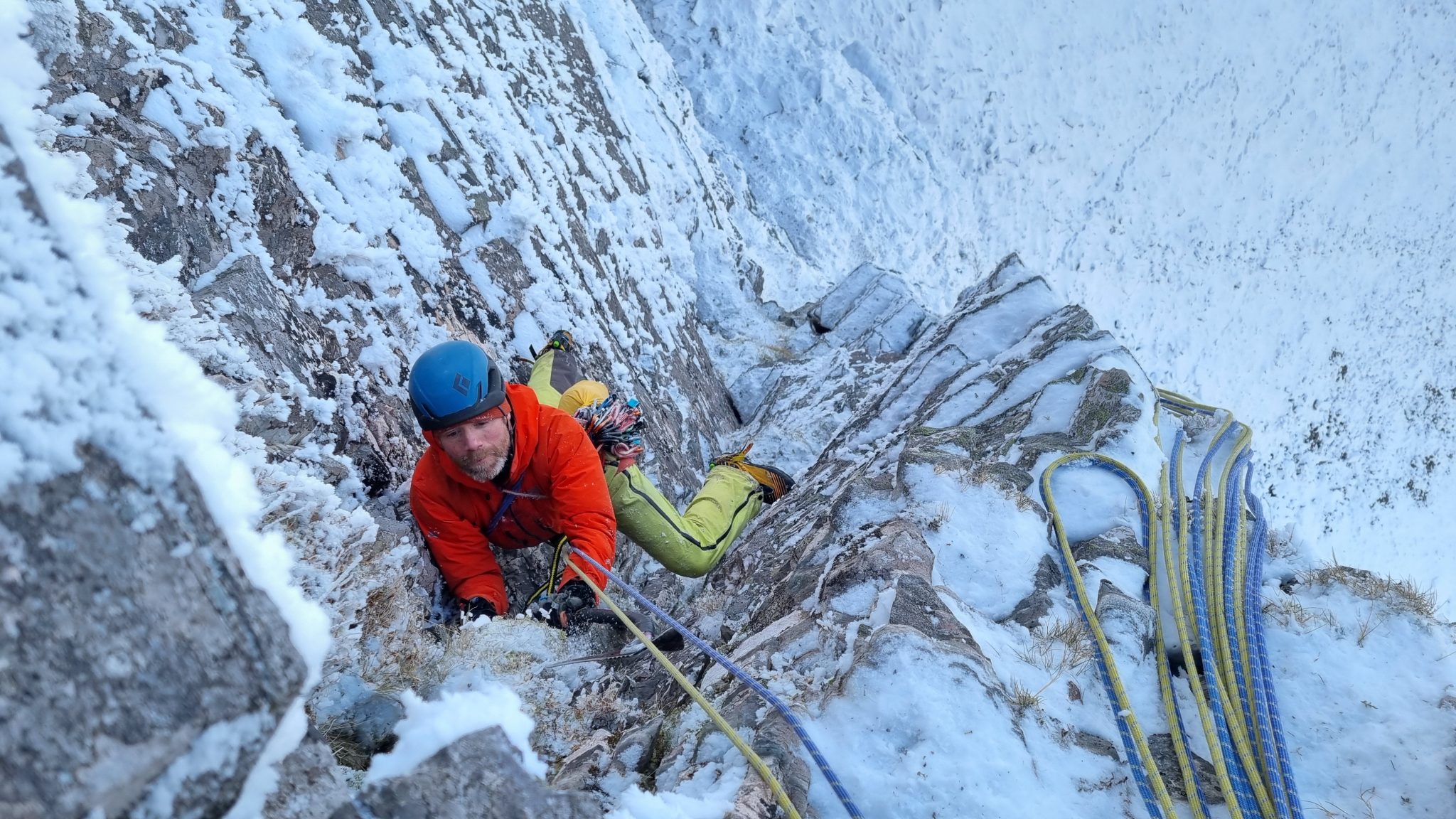
Upper body strength matters, of course, but in Scottish winter climbing it is rarely about bicep power alone. You need lock-off strength for placing gear, shoulder stability for torquing axes, and grip endurance that works in thick gloves. Pull-ups remain a staple for climbers, but adapting them for winter conditions is key. Weighted pull-ups help replicate the feel of wearing a rack and pack. Towel pull-ups or fat grip hangs simulate tool handles and build forearm endurance. Core strength is also vital. Steep icy bulges and awkward chimneys demand controlled movement from the hips, and a strong core keeps you balanced when footholds disappear beneath powder snow.
Technical skill is where winter climbing differs most dramatically from other styles. Strength alone will not save you when your tool placements are poor or your crampon technique is sloppy. Training for winter movement requires creativity if you do not live in Scotland year-round. Dry tooling sessions can be incredibly valuable when carefully managed in the right locations. Using old tools or training picks on steep ground builds confidence in moving with axes and teaches crucial body positioning. Mixed climbing sessions in quarries or designated areas replicate torquing, hooking and delicate footwork.
Even when indoors, it is worth rehearsing winter movement patterns. Climbing with axes on wooden training boards or specially designed winter walls builds coordination and confidence. Some modern climbing facilities offer winter skills training areas and even ice climbing towers, including places like Ice Factor, which used to provide year-round ice and dry tooling opportunities. Practising placing tools deliberately rather than simply pulling hard encourages better habits when things get serious on a frozen face.
Another vital element in training is cold adaptation. Scottish winter is not just cold, it is wet, penetrating and demoralising. One of the biggest challenges is staying warm and functional when everything feels hostile. Training occasionally in cold conditions improves tolerance and helps you dial in your layering and glove systems. Winter hill days for fitness, even when not climbing, build familiarity with decision making while tired, cold, and exposed. The more comfortable you become in foul weather, the less mentally draining actual climbing days feel.
Mental strength is one of the great separators between successful winter climbers and those who struggle. Fear management becomes particularly important when protection is sparse, visibility is low, and spindrift pours down every belay. Training under controlled but uncomfortable circumstances prepares you for that stress. Climbing when slightly fatigued, doing routes near your limit, or deliberately training in poor weather all build psychological strength. Visualisation is also an underrated tool. Imagining sequences, placements, and success in advance improves confidence when encountering similar situations on real routes.
Flexibility and injury prevention are often forgotten until something goes wrong. Winter climbing places heavy stress on shoulders, elbows, and hips. Regular mobility work prevents the build-up of tension and maintains the range of motion. Stretching, yoga, and antagonist training all help keep your body balanced. Prehab exercises for shoulders and wrists reduce the risk of overuse injuries, which are common when dry tooling or increasing pull-up volume.
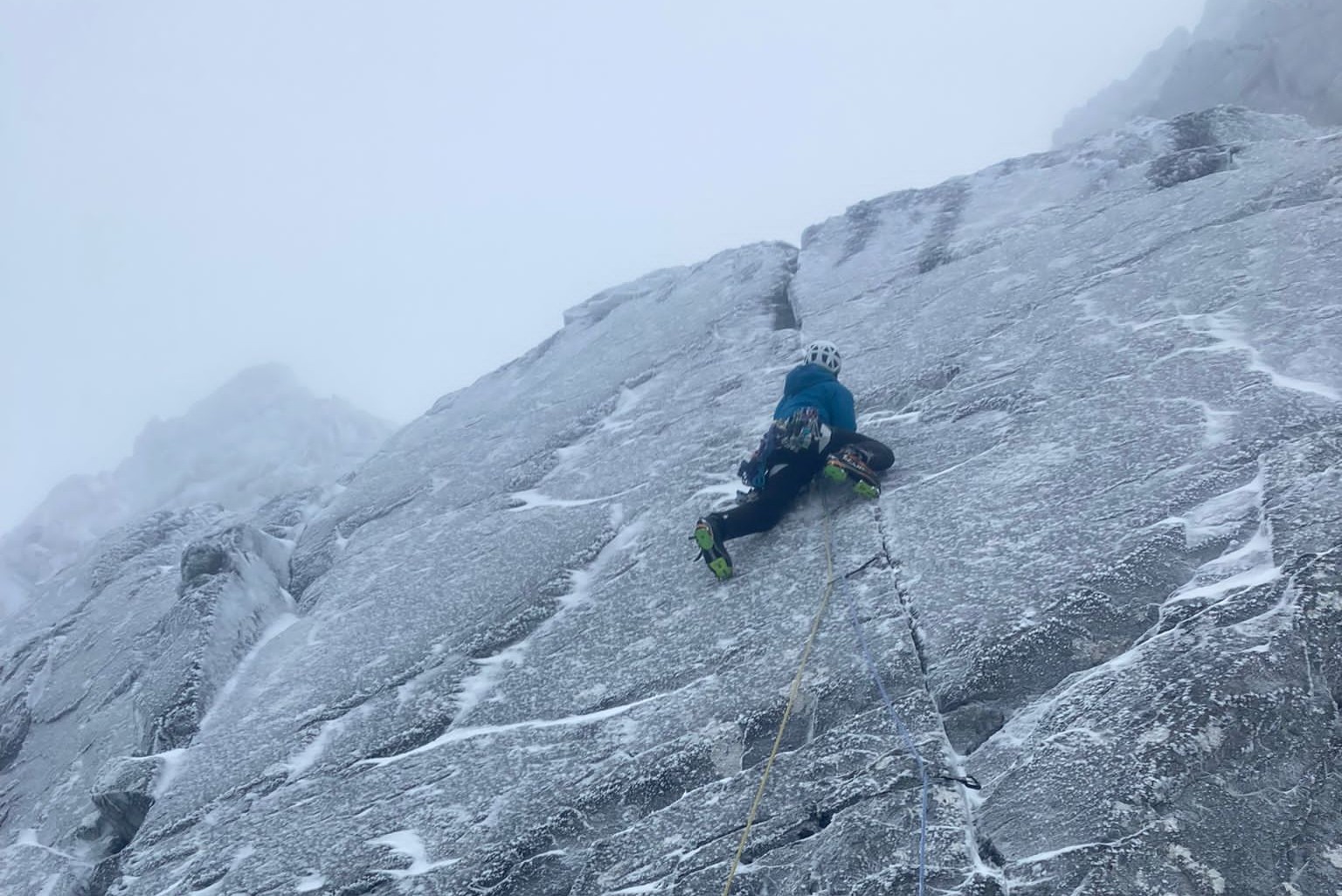
Consistency is far more important than heroic bursts of effort. A sensible training plan for Scottish winter should be sustainable through autumn and early winter. Alternating endurance days with strength sessions allows recovery while maintaining momentum. Regular exposure to climbing movement in any form preserves coordination and confidence. Training little and often keeps progress moving without burnout.
Nutrition and recovery complete the picture. Winter climbing burns vast amounts of energy, and training must reflect that output. Eating well, staying hydrated, and sleeping enough all directly influence performance in the hills. Training while permanently exhausted only increases injury risk and limits adaptation. Recovery days are as important as hard sessions, especially during heavy winter training cycles.
One of the great joys of Scottish winter climbing is its unpredictability. Conditions shift overnight, routes transform, and no two days are the same. Training should aim to prepare you for that uncertainty rather than a single perfect scenario. The most effective winter climbers are not necessarily the strongest, but those who arrive fit enough, skilled enough, and tough enough to adapt when plans fall apart.
Ultimately, training for Scottish winter climbing is about building trust in yourself. Trust that your legs will carry you through the approach, that your arms will place tools accurately when tired, and that your mind will stay calm when things turn wild. When the wind howls on the plateau and spindrift snakes down the gully, preparation becomes your greatest partner.
Scottish winter rewards those who show up ready for battle but open to adventure. Train with respect for the environment you are entering, prepare for discomfort as much as performance, and you will discover that winter climbing is not something you endure, but something you fall deeply in love with.
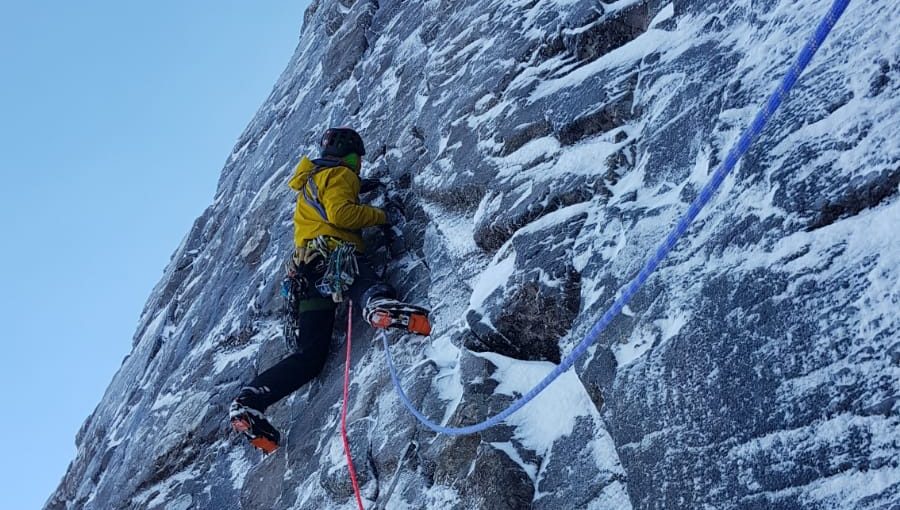
Come Winter Climbing with Synergy Guides!
Synergy Guides deliver guided climbing and mountaineering on Skye, Ben Nevis and in the mountains of Glencoe. We also offer instructional courses and bespoke adventures for larger groups.
Synergy Guides deliver Winter Mountaineering from our base in Fort William where we teach people how to stay safe in the winter environment. We aim to cover the basics plus climb some classic introductory mountaineering routes on Ben Nevis and in Glencoe.
Already an experienced mountaineer? Take your skills a step further and join us for an Intro to Winter Climbing or push your grades on a Performance Winter Climbing course.
About the author
Steve Holmes owns Synergy Guides, he is a fully qualified Mountaineering Instructor and holds the WMCI (MIC) award. He spends most of the spring/summer on Ben Nevis and the Isle of Skye. You can read more about him here.